

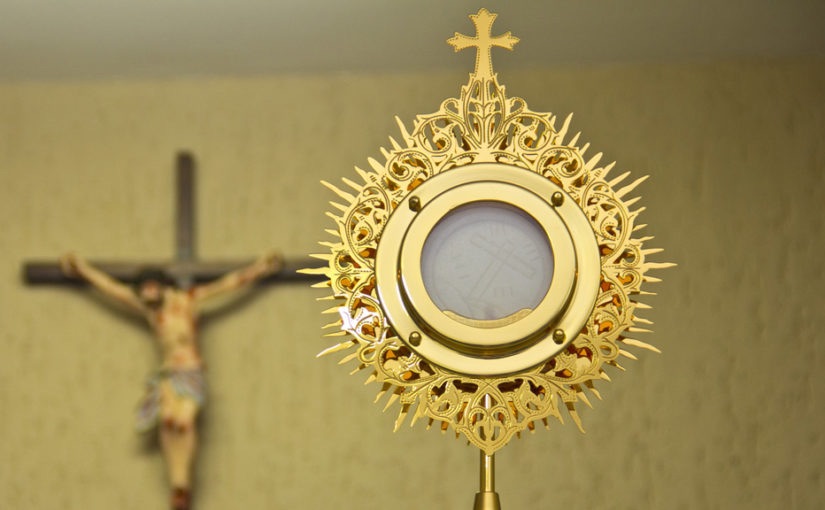
Diving straight into this, when Jesus said, “Do this in remembrance of me,” He was not making the Eucharist symbolic. The Greek text used “anamnesis” does not mean a mental memory or symbolic reflection. In Jewish and biblical language, anamnesis means a sacred action that makes God’s saving work present again. Just as the Passover “remembrance” was a real participation in the Exodus, so the Eucharist is the real participation in Christ’s sacrifice. Jesus was giving the Apostles a sacramental action that makes His Body and Blood truly present, not a symbol. He was also pointing toward His death, resurrection, and departure from the earth, but the command to “remember” means to enter into the reality of His sacrifice, not merely to think about it. In Corinthians 11:27-32 Paul tells us to examine ourselves and only then eat of the bread and drink the cup. This is a reality far deeper than symbolism. The early Church unanimously taught the Real Presence, and this is shown clearly in the writings of the early Church Fathers. Ignatius of Antioch taught that heretics are those who refuse to confess that the Eucharist is the flesh of Christ, and Justin Martyr explained to pagans that Christians do not receive the Eucharist as ordinary bread and drink but as the actual flesh and blood of the incarnate Jesus. Irenaeus said the bread becomes the Eucharist, the Body of Christ, and used the Eucharist as proof of the reality of the Incarnation. Tertullian insisted Christ made the bread His body and said the flesh is nourished by the body and blood of Christ. Hippolytus recorded early liturgical prayers asking God to make the bread become the Body of Christ. Origen affirmed the Eucharist is the Lord’s Body and must be approached with fear. Cyprian spoke of the cup containing Christ’s blood. Cyril of Jerusalem taught that what appears to be bread is truly Christ’s Body because Christ Himself declared it. Ambrose explained that the words of Christ change the elements. Augustine is often misunderstood by Protestants, but he consistently taught that the consecrated bread becomes the Body of Christ, that Christ carried Himself in His own hands at the Last Supper, that the Eucharist is what hung on the Cross, and that only blessed bread becomes Christ’s Body. Scripture and witnesses of the early Church affirm the Eucharist is truly the body and blood of our Lord.
This work represents a developing theological reflection written in fidelity to the Catholic Church. Revisions may occur as understanding deepens.
12/15/2025
 Veiled Disciple